Vitamin B12- 10 μg
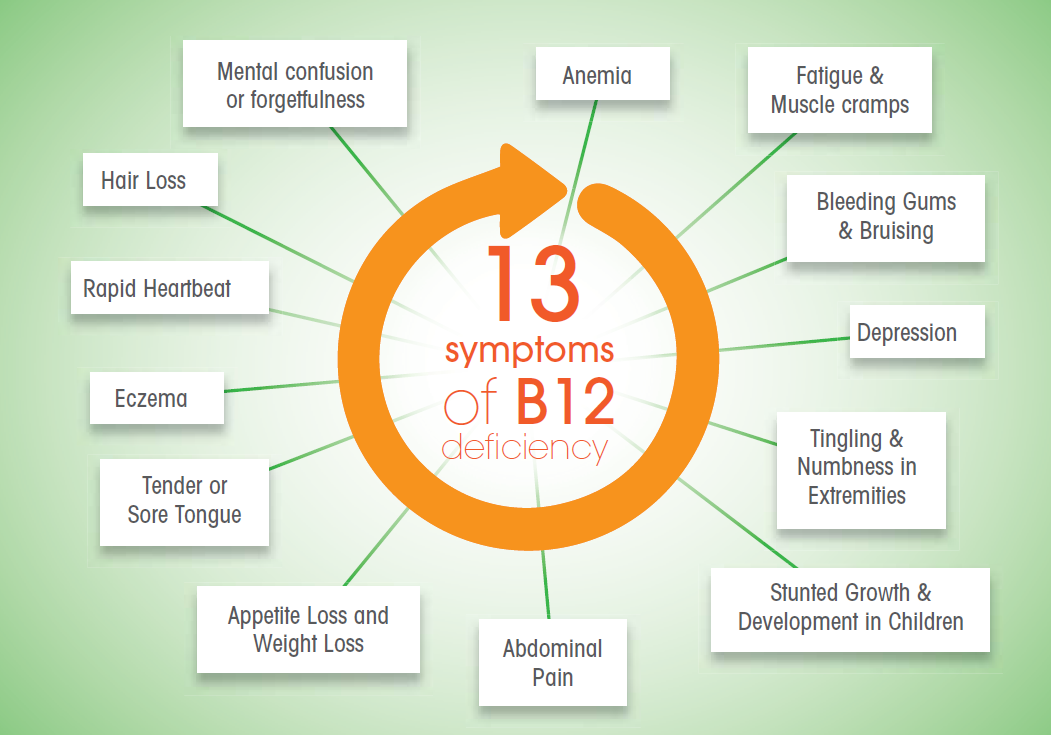
Vitamin B12 deficiency is common in old age and may not be easy to recognize. People with vitamin B12 deficiency are at risk for nerve damage, anemia and degeneration of the spinal cord. Even relatively mild deficiency can affect brain functions and the nervous system, and the nerve damage may develop into permanent debilitation if left untreated.
Folate and vitamin B12 deficiency have the same hematologic symptom, megaloblastic anemia, which disappears after supplementation with large amounts of folic acid (that could be reached thanks to mandatory food fortification with folic acid), particularly in the elderly. Folic acid supplementation may activate synthesis of purine and pyrimidine through a specific pathway correcting anemia, although vitamin B12 is still absent; on the contrary nerve and cognitive deterioration related to vitamin B12 deficiency may continue unchecked.(9)
Quatrefolic® supplementation does not activate purine and pyrimidine synthesis and, if vitamin B12 is absent, 5 MTHF remains“metabolically trapped”. This situation produces a “pseudo folate deficiency” because although the cells have adequate levels of folate, it is trapped as 5-MTHF form allowing doctors to diagnostic vitamin B12 deficiency (19,20,21).
Sources of vitamin B12 in the diet
Vitamin B12 is synthesised by bacteria and found in animal products (eg, meat, eggs, milk and milk products). Plant sources, such as seaweed and spirulina, often contain vitamin B12 analogues, which have not been shown to have vitamin B12 activity in the human body. These vitamin B12 analogues may even increase the risk of vitamin B12 deficiency through competition. Bacteria in the human intestine synthesise B12, but the bioavailability of this B12 is uncertain (Martens et al 2002).
People at risk of vitaminB12 deficiency